Packaging Marketing Should Work as Hard as Your Equipment
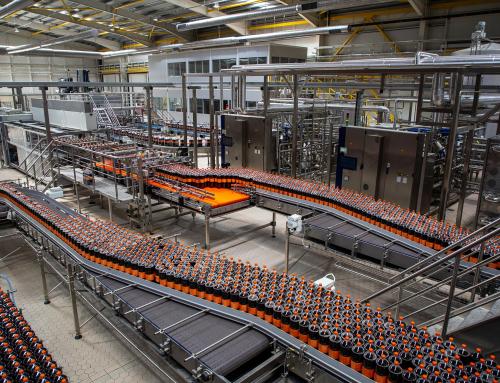
Packaging companies spend their days helping customers become more efficient.
They develop equipment that increases production speeds, technologies that reduce waste, systems that improve accuracy, and solutions that make packaging operations more flexible.
Performance is everything.
So why should marketing be any different?
For packaging companies, a strong marketing program should do more than create awareness. It should help generate qualified leads, support sales, communicate competitive advantages, and contribute to business growth.
That requires more than an occasional social media post or product announcement.
It requires a strategy.
Start With the Problems Your Customers Need to Solve
Packaging buyers rarely wake up thinking about a particular piece of equipment.
They are thinking about production challenges.
Maybe they need to reduce labor requirements. Perhaps their current equipment cannot keep up with demand. They may be looking for more sustainable packaging options or trying to accommodate a growing number of SKUs.
Those challenges should guide your marketing.
Instead of focusing exclusively on product features, packaging companies should explain how their solutions improve operations.
That might include:
- Increasing packaging line throughput
- Reducing material consumption
- Improving labeling accuracy
- Supporting faster product changeovers
- Automating repetitive processes
- Reducing downtime and maintenance requirements
- Improving packaging consistency
- Supporting sustainability initiatives
This approach makes marketing more relevant to buyers and creates stronger opportunities for search visibility.
Your Website Should Answer Questions Before Sales Has To
A packaging company’s website should make it easy for customers to understand what its equipment or technology does and where it fits within their operation.
Application pages are particularly valuable.
A company offering labeling equipment, for example, might develop content around pharmaceutical labeling, food packaging, tamper-evident labeling, or high-speed automated applications.
Each page can address a specific market and explain the operational challenges the technology solves.
That creates a more useful experience for visitors while supporting search engine optimization.
It also provides the type of detailed context that AI-powered search platforms use to interpret information.
GEO Creates New Opportunities for Packaging Brands
Generative Engine Optimization is becoming an important consideration for B2B companies.
Packaging buyers may increasingly use AI tools to research equipment categories, compare technologies, and identify potential suppliers.
A website with detailed application information, clear product descriptions, relevant FAQs, and credible technical content is better positioned to support this type of discovery than one built around generic marketing language.
However, GEO is not about simply adding questions to every page.
It is about providing accurate, useful information that clearly establishes what your company does, who it serves, and what problems it solves.
A specialized B2B digital marketing agency can help packaging companies organize their content around those objectives.
Trade Shows Should Be More Than a Few Days of Marketing
Packaging companies invest significant resources in events such as PACK EXPO.
Booth space, equipment transportation, travel, staffing, and demonstrations represent major investments.
Yet many companies begin promoting their attendance only a few weeks before the show and stop communicating as soon as it ends.
That leaves substantial marketing value on the table.
A stronger approach integrates trade shows into a broader campaign.
Before the event, companies can promote equipment demonstrations, schedule meetings, launch targeted digital advertising, and distribute press releases.
During the show, they can capture product videos, customer conversations, and interviews with technical experts.
After the event, that content can support follow-up campaigns, sales outreach, blogs, social media, and future marketing initiatives.
The result is a longer-lasting return on the original investment.
Measure What Matters
Packaging marketing should be evaluated against meaningful business objectives.
Website traffic and social media engagement provide useful information, but they do not tell the entire story.
Companies should also evaluate qualified inquiries, target account engagement, lead-to-opportunity conversion, sales pipeline contribution, and campaign performance.
For companies searching for a digital marketing agency NJ or a national B2B digital marketing agency, finding a partner that understands those business metrics is important.
At Turchette B2B Marketing and Public Relations, we believe marketing should be accountable, strategically focused, and connected to business development.
Your equipment is engineered to perform.
Your marketing should be too.
Key Takeaways
Packaging marketing should focus on operational outcomes, not just equipment specifications.
Application-specific website content supports SEO and GEO.
Clear, accurate technical content helps buyers research solutions.
Trade shows should be integrated into year-round marketing campaigns.
Marketing performance should be evaluated using lead quality and business outcomes.
Frequently Asked Questions
What is the best marketing strategy for packaging equipment companies?
An effective strategy combines SEO, application-focused content, video, public relations, targeted digital advertising, trade show marketing, and lead generation.
How can packaging companies improve GEO visibility?
Packaging companies can improve their content for AI discovery by publishing accurate technical information, detailed application pages, customer case studies, FAQs, and clearly structured industry-specific resources.
Why should packaging companies work with a specialized marketing agency?
A specialized agency understands packaging technologies, industrial buying behavior, trade media, long sales cycles, and how to communicate technical value to different decision-makers.
What metrics should packaging companies track?
Important metrics include qualified leads, conversion rates, organic search performance, target account engagement, cost per qualified lead, and sales pipeline contribution.