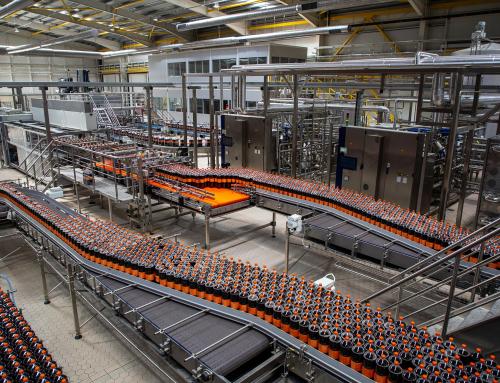
Industrial Automation Is Evolving. Is Your Marketing Keeping Up?
The industrial automation industry is undergoing a fundamental transformation. Artificial intelligence, robotics, machine vision, advanced motion control, and connected manufacturing systems are changing how companies design, operate, and optimize their production environments.
For automation technology providers, system integrators, and robotics manufacturers, these advancements create tremendous opportunities. They also introduce a significant marketing challenge: how do you communicate increasingly sophisticated technologies to an audience that includes engineers, plant managers, operations executives, procurement teams, and C-suite decision-makers?
The answer requires more than traditional product marketing. It demands a comprehensive B2B marketing strategy that connects technical capabilities to measurable business outcomes.
For industrial automation companies, the most effective marketing programs combine deep industry knowledge, technical storytelling, search visibility, thought leadership, and targeted demand generation.
1. Shift the Conversation From Technology to Business Outcomes
Automation companies often lead their marketing with technical specifications: cycle times, payload capacities, positioning accuracy, programming environments, and equipment configurations.
These details are essential, particularly for engineers evaluating potential solutions. However, they rarely tell the entire story.
Today’s industrial automation buyers want to understand how technology will help them address critical operational challenges, including:
- Increasing production throughput and overall equipment effectiveness (OEE)
- Reducing downtime and unplanned maintenance
- Overcoming skilled labor shortages
- Improving product quality and manufacturing consistency
- Supporting flexible, high-mix production environments
- Accelerating return on investment
An effective automation marketing strategy connects product capabilities directly to these outcomes.
For example, rather than simply promoting an AI-powered machine vision system, a manufacturer can demonstrate how that system reduces inspection errors, improves quality control, and supports higher production efficiency.
The technology remains central to the message, but the business value becomes the reason to engage.
2. Develop Content for Multiple Technical and Business Decision-Makers
Industrial automation purchasing decisions rarely involve a single individual.
A controls engineer may prioritize system compatibility and programming flexibility. A plant manager may focus on uptime and throughput. A financial executive may be concerned with capital expenditures and payback periods.
Successful B2B automation marketing must address these different priorities throughout the buying journey.
Technical white papers, application notes, and product demonstrations can help engineers evaluate performance. Case studies, ROI-focused content, and executive thought leadership can help operations and business leaders justify investment.
By aligning content with buyer personas and purchasing stages, automation companies can build trust across the entire decision-making team.
3. Optimize for Traditional Search and AI-Powered Discovery
Search behavior is changing.
Industrial buyers increasingly use AI-powered search tools and conversational platforms to research technologies, compare suppliers, and understand potential solutions.
Instead of searching only for a product category, a prospect may ask:
- What are the best automation solutions for high-mix manufacturing?
- How can machine vision improve pharmaceutical packaging inspection?
- What should manufacturers look for in a robotic systems integrator?
- How can industrial automation reduce production downtime?
This shift makes Generative Engine Optimization (GEO) an important extension of traditional Search Engine Optimization (SEO).’
SEO helps companies improve visibility in search engine results. GEO focuses on making content understandable, credible, and useful to AI-driven discovery systems.
For automation companies, that means publishing clear explanations of technical concepts, addressing specific application challenges, documenting measurable results, and establishing expertise across relevant industry topics.
A strong digital content program should incorporate both strategies rather than treating them as competing disciplines.
4. Use Video to Make Complex Automation Easier to Understand
Few marketing tools communicate the value of industrial automation as effectively as video.
A robotic assembly cell, vision-guided inspection system, or advanced motion control platform can be difficult to explain through written descriptions alone.
Video allows prospective customers to see technology operating in real-world environments.
High-value formats include equipment demonstrations, customer success stories, facility tours, engineer interviews, and application-specific explainers.
A single well-produced automation video can also support multiple marketing channels, including website landing pages, LinkedIn campaigns, trade show promotions, email marketing, and sales presentations.
The key is ensuring that video communicates more than how a machine operates. It should clearly explain why the solution matters to the customer.
5. Build Industry Authority Through Public Relations and Thought Leadership
Industrial automation is a highly specialized market where credibility plays a major role in purchasing decisions.
Earned media coverage, contributed articles, technical commentary, and executive interviews can help automation companies establish authority beyond their owned marketing channels.
Trade publications serving automation, robotics, manufacturing, packaging, and engineering audiences provide opportunities to reach relevant decision-makers.
Public relations also supports broader digital visibility by creating additional opportunities for companies, technologies, and subject-matter experts to be discovered online.
When integrated with SEO, GEO, and content marketing, PR can help reinforce a consistent narrative about a company’s capabilities and market expertise.
6. Connect Marketing Activity to Sales Pipeline Growth
Industrial automation sales cycles can be lengthy and technically complex.
That makes it essential to measure marketing performance beyond impressions and website traffic.
Useful metrics include qualified inbound inquiries, marketing-qualified leads, sales-qualified opportunities, target-account engagement, organic search conversions, and marketing-influenced pipeline.
For companies selling high-value automation systems, generating a smaller number of highly qualified opportunities can be more valuable than attracting large volumes of unqualified website visitors.
The most effective marketing strategies connect awareness-building activities to measurable commercial objectives.
Frequently Asked Questions About Industrial Automation Marketing
What is industrial automation marketing?
Industrial automation marketing is the strategic promotion of robotics, control systems, machine vision, motion technologies, system integration services, and related manufacturing solutions to industrial buyers. It combines technical content, digital marketing, public relations, and demand generation to reach engineering, operations, and executive audiences.
How can automation companies generate more qualified leads?
Automation companies can improve lead generation through application-focused SEO, targeted LinkedIn advertising, technical content, customer case studies, conversion-optimized landing pages, and coordinated sales and marketing programs.
Why is GEO important for automation companies?
GEO helps automation companies structure content so AI-powered discovery platforms can better interpret their expertise, solutions, applications, and technical capabilities. It complements SEO and supports visibility as industrial research behavior evolves.
Partner With a B2B Marketing Agency That Understands Automation
At Turchette – B2B Marketing & Public Relations, we understand that marketing industrial automation technology requires more than creative messaging. It requires the ability to translate complex engineering innovations into compelling business value.
From strategic positioning and website development to technical content, digital advertising, video production, SEO, GEO, and public relations, Turchette helps automation companies communicate their differentiation and connect with the audiences that matter.